
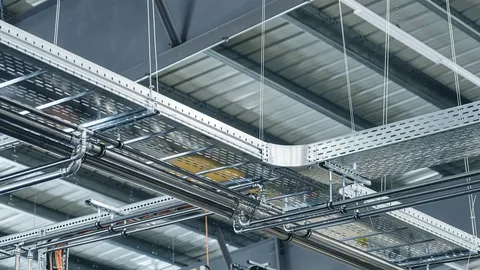
📦 Cable Management & Tray Installations
📖 Description
Cable management and tray installations are essential for organizing, protecting, and supporting electrical and data cables in residential, commercial, and industrial facilities. Proper cable routing prevents clutter, improves system efficiency, reduces fire risks, and ensures easy accessibility for maintenance and future upgrades. Cable trays, conduits, and trunking systems are widely used to provide a safe, durable, and cost-effective solution for handling large volumes of wiring.
⭐ Key Features
Structured Cable Organization – Neat and accessible arrangement of electrical and data cables.
Variety of Tray Types – Ladder trays, perforated trays, wire mesh, and solid-bottom trays.
Durability – Made from galvanized steel, aluminum, or fiberglass for long-lasting performance.
Safety Compliance – Reduces fire hazards, overheating, and short-circuit risks.
Scalable Solutions – Suitable for residential, commercial, and industrial applications.
Easy Accessibility – Facilitates quick modifications, upgrades, and repairs.
Aesthetic & Professional Finish – Ensures clean and organized installations.
🛠️ Maintenance Practices
Routine Inspections – Check trays and conduits for corrosion, cracks, or damage.
Cleaning – Remove dust, dirt, and debris to prevent overheating and fire hazards.
Cable Integrity Check – Inspect insulation for wear, cuts, or signs of overheating.
Fastener & Support Check – Tighten loose bolts, clamps, and brackets.
Load Management – Ensure trays are not overloaded beyond rated capacity.
Fire Safety – Confirm fire-stopping materials and fire-retardant coatings are intact.
Upgrades & Expansion – Add capacity or reroute cables when new systems are installed.